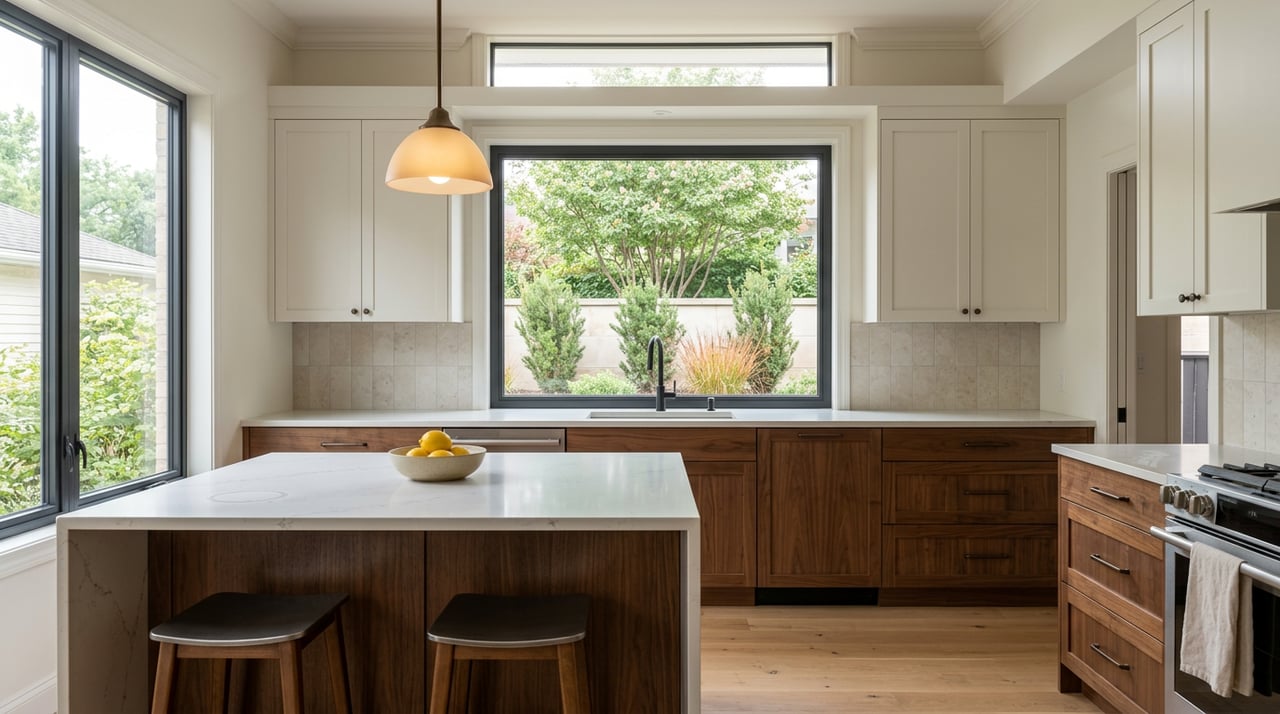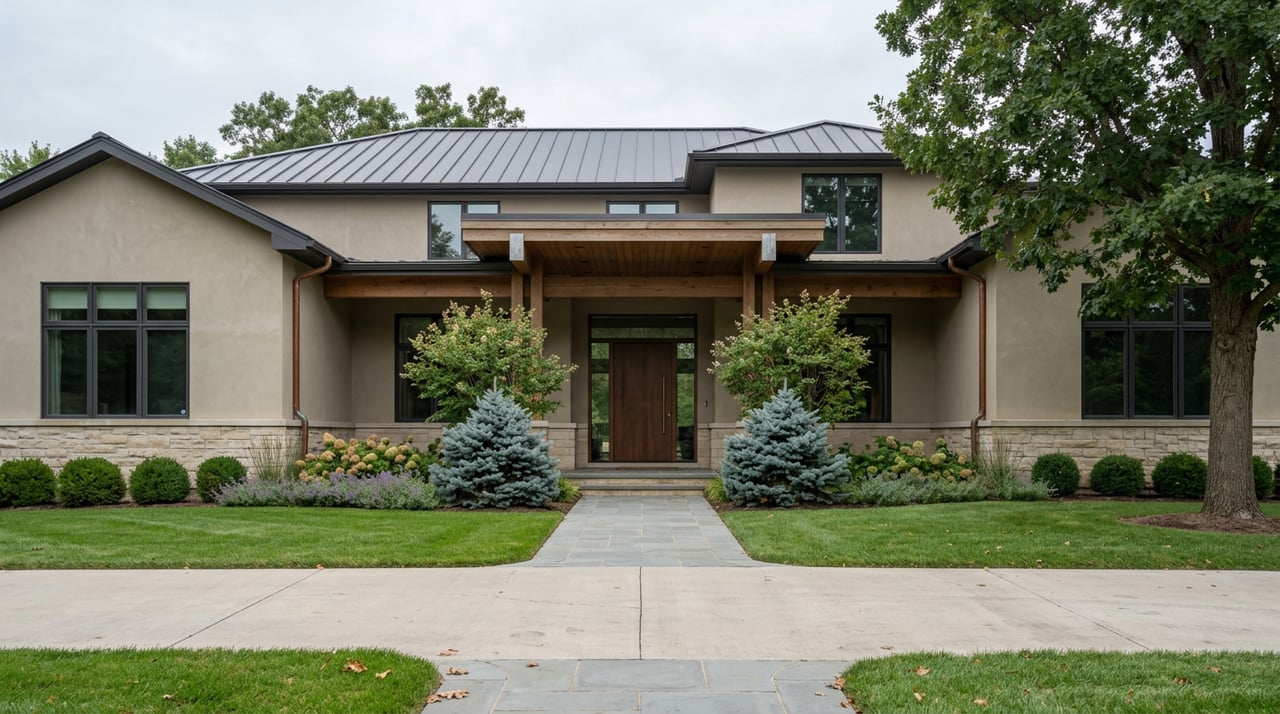
Why would two homes listed at $850,000 in the same Colorado zip code carry monthly bills that differ by three or four hundred dollars, with nothing on the listing sheet explaining the gap?
That question comes up more often than you'd expect for buyers comparing homes across Castle Pines. The city spans a gated golf community, a fast-growing new-construction district built around a reservoir, and an older established section that predates both. Each one prices its non-mortgage costs through a different mix of private and governmental entities, and the split between those two isn't visible until you ask for it directly. Get the mix wrong and you'll underestimate what a home actually costs to own, sometimes by thousands of dollars a year.
Two entities, two very different bills
Every Castle Pines home sits under at least one of two kinds of authority that charge you money beyond the mortgage. A homeowners association is a private corporation. Its board sets an annual budget, collects dues, and spends them on the things covenants promise: landscaping, gate staffing, pool upkeep, architectural review. A metropolitan district is different in kind, not just in name. It's a unit of local government, created to fund public-type infrastructure such as roads, water lines, and stormwater systems, often by issuing bonds that get repaid through a mill levy on your property tax bill for years, sometimes decades.
The confusion starts because both show up as recurring charges, and neither one is optional once you own the home. But they behave differently. HOA dues can rise or fall with an annual budget vote. A metro district's debt mill levy is often locked in for the life of the bond, meaning it won't disappear just because a new board takes over. And in the early years of a new-construction community, that board itself may still be developer-controlled, which means the residents paying the mill levy don't yet have a full vote in how it's spent.
Castle Pines happens to be a good place to see this play out, because its three main sections lean on the two entities in almost opposite proportions.
What the fee actually buys, pocket by pocket
| Area | Typical price range (August 2026 listings) | Where the private money goes | Where the governmental money goes |
|---|---|---|---|
| Castle Pines Village | Roughly $800,000 into the low $2 millions, with custom estates well past $10 million | CPHA master dues plus up to 19 sub-association assessments, commonly $300 to $600 a month, funding gated access, round-the-clock emergency response, trails, and pool upkeep | The Village's own metropolitan district bills separately for water, sewer, stormwater, and a capital improvement fee, on top of a district mill levy that sits just under 34 mills |
| The Canyons | Roughly $700,000 to $900,000 for new construction, varying by neighborhood phase | HOA dues tend to run lighter here, because the metro district itself maintains the parks, trails, and open space, and even handles design review and covenant enforcement, tasks an HOA would normally cover elsewhere | Multiple metro districts, numbered 1 through 11 depending on which phase you're buying into, are authorized to issue up to $475 million in bonded debt with a maximum 69-mill debt levy, which typically adds $1,500 to $4,000 a year on top of the county's base property tax |
| Castle Pines North | Generally the most affordable of the three sections, with resale homes commonly listed under $950,000 | Some parcels carry no HOA at all; others have modest dues | This section predates most of the newer district formations, so governmental add-ons here are generally lower or absent |
The table makes the pattern obvious once you see it laid out. In the Village, the private piece of the bill is large and visible as a monthly HOA due, while the governmental piece is mostly tucked into utility billing. In the Canyons, it flips. The governmental piece, tied to hundreds of millions in authorized bond debt for roads and infrastructure that didn't exist a decade ago, is the bigger add-on, while the private piece stays light because the district itself, not an association, is doing the work of maintaining shared land and enforcing covenants.
Neither structure is better. But comparing a Village listing to a Canyons listing using only the HOA line item is comparing two different things. You have to ask what each community's metro district is authorized to levy, not just what the association charges.
A market that's actually two markets moving in opposite directions
That structural split shows up in the sales data too, and it's easy to misread if you only look at one number. Over the three months ending in May 2026, homes across the broader Castle Pines market sold for a median of roughly $999,000, up close to 13 percent from the same period a year earlier. Over that same three-month window, Castle Pines Village alone posted a median sale price near $1.6 million, down slightly from a year earlier. Its average sale price for the most recent month on record told a louder story, down nearly 29 percent from a year earlier.
Read quickly, that looks like the Village is cooling sharply while the rest of the city heats up. Read carefully, it's a smaller story than that. A 29 percent swing in an average, in a pocket that sells fewer than 40 homes in a typical month, is usually a sign that one or two ultra-high sales dropped out of the mix, not evidence of a broad repricing. The median, which resists that kind of outlier swing, barely moved. Meanwhile the Village actually closed more transactions in May 2026 than it did the year before, 38 versus 30, and homes there sold faster too, in about 33 days on average compared with 67 days the prior year. That's not a market losing interest. It's a market where fewer eight-figure estates changed hands in a single month, pulling the average down without pulling actual demand down with it.
The broader Castle Pines number, which is the one most portal searches surface first, is really telling you about the Canyons and Castle Pines North, where a wave of new construction and steady resale activity has pushed the citywide median higher. Listing data for August 2026 put the citywide median list price near $935,000, with homes spending a median of 125 days on the market before going under contract, about the same pace as a year earlier. That's a market absorbing new supply at a fairly patient clip. It's a different rhythm than what's happening inside the gates.
Redfin tracks Castle Pines Village as its own separate market page rather than folding it into the citywide numbers, which is itself a small confirmation that these are two markets behaving on their own timelines, not one market with a single temperature.
What to actually ask before you compare two offers
If you're weighing a home in the Village against one in the Canyons, or either against an older resale in Castle Pines North, the price per square foot won't tell you which one costs more to hold. Ask for these instead:
- The HOA's current budget and reserve study, plus a list of any sub-association fees that stack on top of the master dues
- The metro district's most recent annual report and its current mill levy, which the district is required to file with the City of Castle Pines
- Whether the district's board is still developer-controlled, and if so, when it's scheduled to transition to resident control
- The district's authorized debt ceiling and whether the community is early or late in that bond repayment schedule
- Any capital improvement fee or one-time transfer fee charged at closing, which shows up separately from monthly dues
Utility costs are worth a second look too. The Village's metro district updated its water rates at the start of 2026, enacted outdoor watering restrictions amid drought conditions earlier this year, and carried out roadway resurfacing on Silver Cloud Place and Country Club Parkway during the second week of August 2026. None of that shows up in an HOA disclosure packet, because none of it is HOA business. It's the district doing what districts do: running infrastructure with tax authority a private association simply doesn't have.
A few direct questions
Is a metro district the same thing as an HOA? No. An HOA is a private corporation governed by covenants you agree to at closing. A metro district is a unit of local government with the power to levy property tax and issue bonds, and its charges appear on your county tax bill rather than a separate HOA invoice.
Does a metro district mill levy ever go away? The operating portion can be adjusted by the board. The debt portion, used to repay bonds for roads, water systems, and similar infrastructure, typically stays in place until that specific debt is retired, which can take decades depending on when the bonds were issued.
Can I negotiate around HOA or metro district costs? Not directly, since both are tied to the property rather than the buyer. What you can do is confirm the exact figures before you write an offer, so the number you're comparing across neighborhoods reflects the full carrying cost rather than just the sticker price.
Buying in Castle Pines means choosing not just a house, but a governance structure that will bill you for decades. If you want the real monthly math on a specific address before you make an offer, Lara Property Group can pull the HOA budget, the district's mill levy, and the bond schedule side by side, so you're comparing what a home actually costs rather than what it happens to list for.